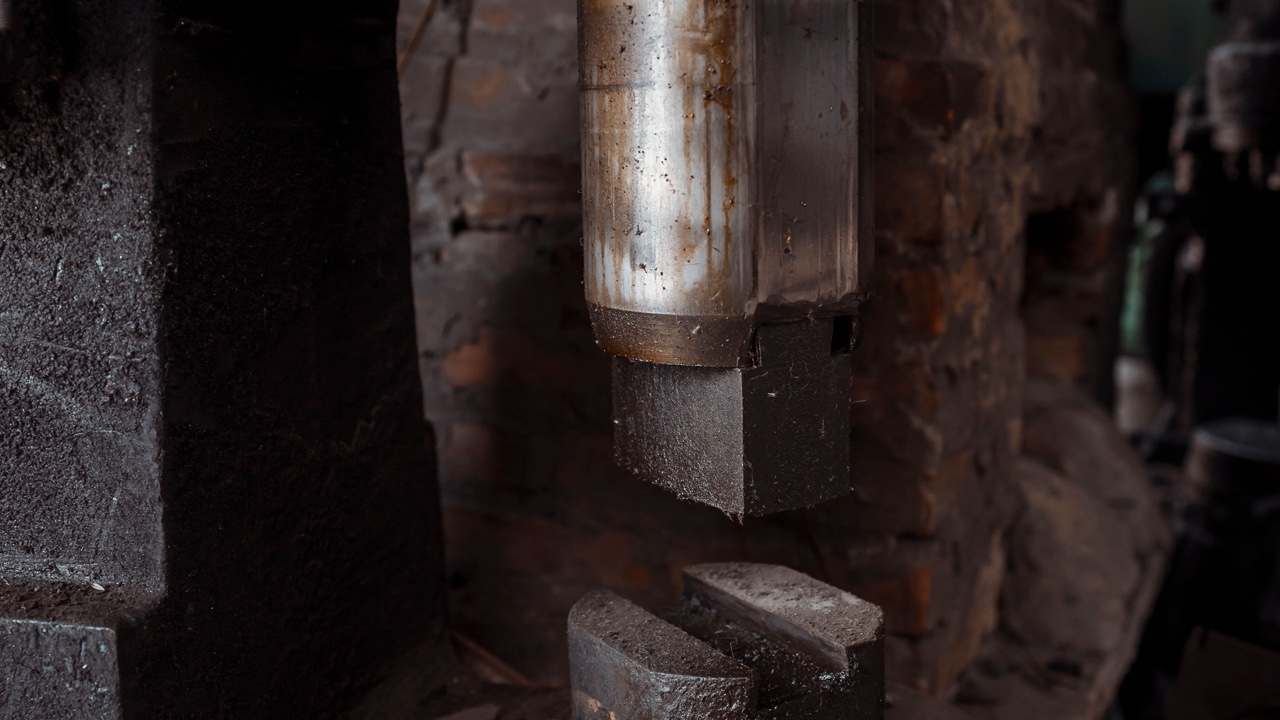
Hammermill performance isn’t determined solely by the machine itself. The hammers are the direct interface between the rotor’s kinetic energy and the material being reduced, and their design, material, geometry, and configuration determine how efficiently that energy gets transferred into size reduction — and how long the hammers last before they need to be replaced. Operations that treat hammermill hammers as interchangeable commodity parts typically leave performance on the table and pay more per ton of output than operations that understand what the variables actually control.
Hammer Weight and Rotor Tip Speed
The kinetic energy available at the hammer tip is a function of hammer weight and rotor tip speed. For a given rotor speed (RPM), heavier hammers carry more kinetic energy and deliver more force per impact — which improves size reduction efficiency for harder, denser materials. Lighter hammers have less inertia, recover their tip speed faster between impacts, and may be more effective at higher impact frequency in applications where rapid successive contacts matter more than force per impact.
The right hammer weight for a given application depends on the material being processed and the target output size. Hammers that are too light for the material don’t fracture it efficiently — the hammer decelerates on contact, loses tip speed, and requires more passes to achieve target reduction. Hammers that are too heavy for the material carry more energy than needed, which doesn’t help size reduction but does increase wear rate and energy consumption per ton.
Most hammermill manufacturers specify a recommended hammer weight range for different material categories. Operating at the bottom of the range for easier-to-reduce materials and the top of the range for harder materials is a reasonable starting point, with field adjustment based on observed production rate and energy consumption.
Hammer Geometry: Face Profile and Cutting Edge Design
The working face of a hammermill hammer — the surface that contacts material — comes in several profiles with different performance characteristics.
Square-face hammers present a flat striking face to the material. They’re symmetrical and reversible (the hammer can be flipped to use the opposite edge when one face wears), which extends the service life per hammer. The flat face produces an impact that fractures material rather than cuts it, which tends to produce coarser, more irregular particle shapes. Square-face hammers are durable and appropriate for coarse reduction applications where particle shape is less critical.
Knife-edge or beveled hammers have a tapered working edge that initiates a cutting action on contact rather than a pure impact. This produces more efficient size reduction, more consistent particle shape, and better performance on fibrous materials that tend to wrap or deflect around blunt hammer faces. The trade-off is that the thinner edge geometry wears faster and is more vulnerable to chipping from hard contaminants than a square face.
Combination or serrated designs incorporate features that both cut and impact, attempting to capture the efficiency of cutting with some of the durability of impact hammers. These work well on specific applications — particularly fibrous agricultural residues — but aren’t universal improvements over simpler designs.
The face profile selection comes down to the specific material and the target output. For clean wood fiber going to biomass fuel: knife-edge efficiency matters. For mixed demolition wood with contamination risk: square-face durability matters more.
Steel Alloy and Heat Treatment
The base material of hammermill hammers determines their hardness, toughness, and wear resistance — and these properties involve the same fundamental trade-off as any wear part: harder materials have better wear resistance but lower impact toughness, which makes them more vulnerable to fracture from sudden high-energy impacts.
Manganese steel (Hadfield steel, 12-14% Mn): work-hardens under impact — the surface layer gets harder the more it’s struck, while the underlying material stays tough. This makes manganese steel hammers well-suited for high-impact applications where both toughness (to resist fracture) and wear resistance (to resist abrasion) are needed. They’re a common choice for applications with contaminated feedstock or unpredictable material.
Chromium-molybdenum (Cr-Mo) alloy steel: offers good balance of hardness and toughness through alloy composition and heat treatment. Can be heat-treated to a specific hardness target — harder for abrasive applications, softer for impact-heavy ones. More predictable hardness profile than manganese steel, which can be advantageous when the operating conditions are consistent.
Wear-plate composite hammers: a tough steel body with a wear-resistant overlay (chromium carbide, tungsten carbide, or similar) on the working faces. The body provides impact toughness; the overlay provides wear resistance at the contact surface. These can offer longer wear life than solid alloy hammers in abrasive applications, at higher initial cost per hammer.
Heat treatment is as important as alloy selection. A hammer made from the right steel but heat-treated incorrectly — wrong temperature, wrong quench rate, inadequate tempering — won’t achieve the intended hardness profile and will underperform against spec.
Hammer Pattern and Rotor Configuration
The number of hammers on the rotor, their arrangement, and their spacing affect mill performance as significantly as individual hammer design.
Hammer density: more hammers per rotor position means more impacts per revolution, which improves size reduction efficiency but increases energy consumption and hammer wear rate. Fewer hammers per position means fewer but heavier individual impacts. The right density depends on the target output size — finer output requires more impacts per unit of material, which favors higher hammer density.
Stagger pattern: hammers on adjacent rows are typically staggered so that each row covers a different portion of the rotor width. This ensures the entire mill width gets coverage from each revolution and prevents material from passing through the mill without contacting a hammer. Incorrect stagger pattern — from mixing hammer sets or installing hammers out of position — leaves coverage gaps that reduce efficiency.
Balance: rotor balance matters for mill vibration and bearing life. Hammers are installed in matched sets, and even slight weight differences between hammers on opposing rotor positions can cause vibration at operating speed. When replacing hammers, replacing the full set rather than individual hammers maintains rotor balance. If individual hammers need replacement — from a breakage event — the opposing position hammer should also be replaced to maintain balance symmetry.
Wear Monitoring and Replacement Timing
Replacing hammers too late — running them past their effective wear life — reduces mill efficiency and production rate as the worn faces become less effective at size reduction. Replacing them too early wastes hammer material and increases replacement cost per ton.
The right replacement interval is established by tracking production metrics against hammer condition: production rate (tons per hour), energy consumption per ton, and output particle size distribution. When these metrics begin to degrade — production rate drops, energy consumption per ton rises, particle size coarsens — the hammers are approaching replacement time.
Some operations use hour-based replacement intervals as a proxy. This works adequately if the feedstock and operating conditions are consistent, but doesn’t account for variation in feedstock abrasiveness or density that causes hammers to wear at different rates in different material conditions. Metric-based replacement is more precise and typically results in better average hammer utilization than fixed-interval replacement.